
Your Garage Door Is the Most-Used Entry Point in Your Home
Think about how many times your garage door goes up and down each day. If you're like most families in Toledo, it's probably at least four times — sometimes more. That adds up to well over a thousand cycles per year, and every single one puts stress on springs, cables, rollers, tracks, and your opener.
Despite all that use, garage door maintenance is one of the most overlooked home tasks. Most homeowners don't think about their garage door until it makes a terrible noise, gets stuck halfway, or stops working entirely. By that point, a small issue has usually turned into an expensive repair.
So how often should you actually service your garage door? And what does proper maintenance look like? Let's break it down.
The Short Answer: At Least Once a Year
At a minimum, your garage door should receive a professional tune-up once a year. For most homeowners in Toledo and surrounding areas like Sylvania, Maumee, and Perrysburg, we recommend scheduling this service in the fall — before winter temperatures arrive and put additional strain on your system.
However, if your garage door sees heavier-than-average use — for example, if multiple drivers in your household come and go throughout the day, or if you use your garage as a workshop — twice-a-year servicing is a smart investment.
What Does a Garage Door Tune-Up Include?
A proper garage door maintenance visit isn't just a quick visual inspection. Here's what a thorough tune-up should cover:
1. Visual Inspection of All Components
A technician will examine every part of your garage door system, including springs, cables, rollers, hinges, tracks, brackets, and the door panels themselves. They're looking for signs of wear, rust, fraying, cracks, or misalignment that could lead to bigger problems down the road.
2. Lubrication of Moving Parts
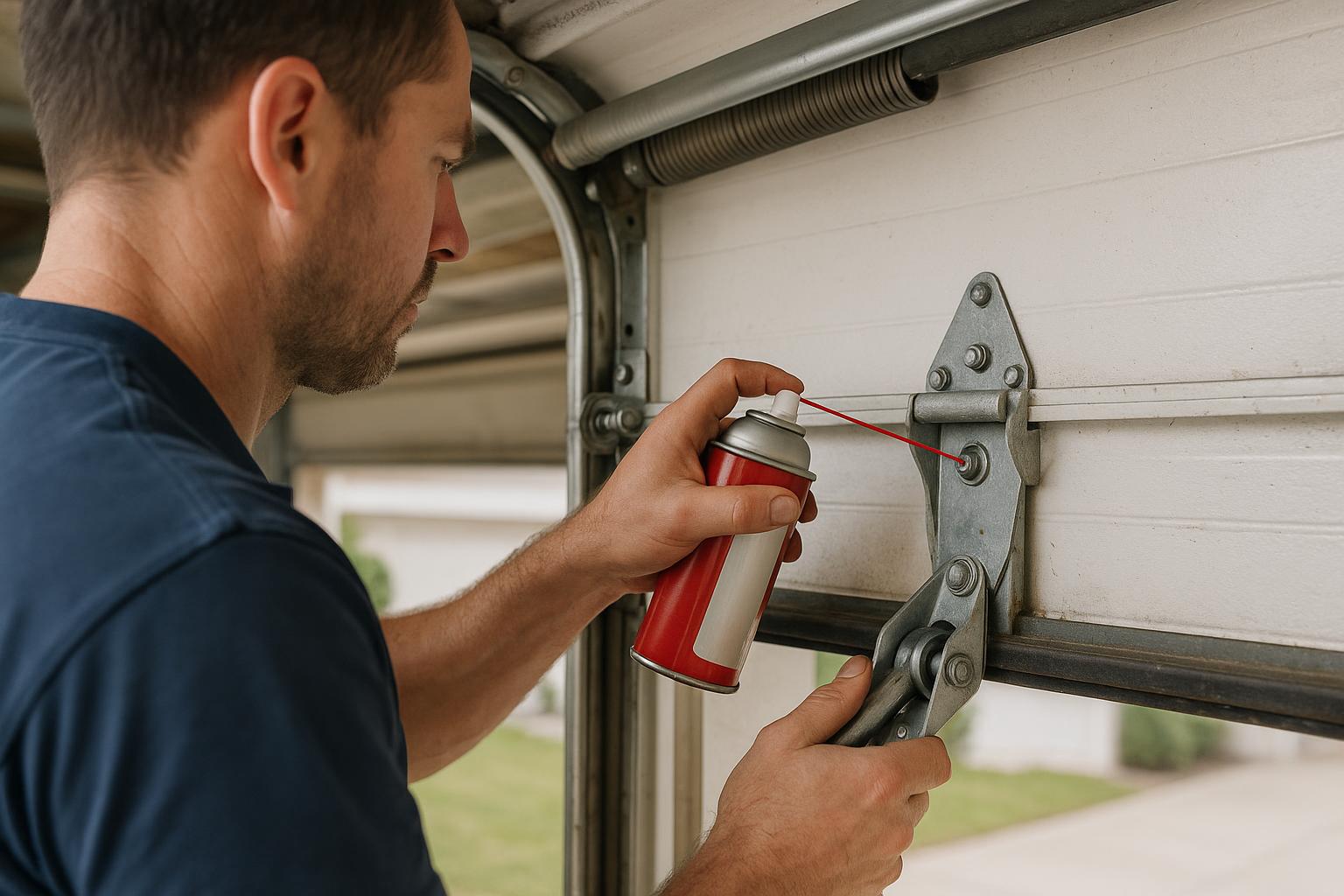
Garage doors have a lot of metal-on-metal contact. Without proper lubrication, parts wear out faster, operate louder, and put more strain on your opener. During a tune-up, your technician will apply the right type of lubricant to springs, rollers, hinges, and the opener's chain or screw drive.
3. Tightening Hardware
The constant vibration of a garage door opening and closing loosens bolts and brackets over time. A maintenance visit includes tightening all the hardware to keep everything secure and properly aligned.
4. Balance Testing
An unbalanced garage door forces your opener to work harder than it should, which shortens its lifespan significantly. Your technician will disconnect the opener and manually lift the door to check its balance. If the door doesn't stay in place when lifted halfway, the springs need adjustment.
5. Safety Feature Testing
Modern garage doors have two critical safety features: the auto-reverse mechanism and the photoelectric sensors near the floor. Both of these should be tested during every maintenance visit to ensure they're functioning correctly. This is especially important if you have children or pets.
6. Weatherstripping Inspection
The rubber seal along the bottom of your garage door and the weatherstripping around the frame keep out rain, snow, cold air, and pests. Over time, these seals crack, tear, or flatten out. Your technician will check their condition and recommend replacement if needed.
7. Opener Evaluation
Your garage door opener will be checked for proper operation, including force settings, travel limits, and any unusual sounds that might indicate a developing problem.
What You Can Do Between Professional Visits
Annual professional maintenance is essential, but there are simple things you can do on your own throughout the year to keep your garage door in good shape:
- Listen for changes. If your garage door suddenly sounds different — grinding, scraping, squealing, or banging — something has changed and it's worth investigating.
- Watch how it moves. A healthy garage door moves smoothly and evenly. If it jerks, hesitates, or moves unevenly from one side, there may be a track or spring issue.
- Keep the tracks clean. Wipe down the inside of the tracks with a damp cloth every few months to remove dirt and debris. Don't apply lubricant to the tracks themselves — this can actually cause problems.
- Test the balance. Pull the emergency release cord and manually lift the door halfway. If it slides up or down on its own, the springs are out of balance and you should call a professional.
- Test the auto-reverse. Place a roll of paper towels on the ground in the door's path and press the close button. The door should reverse when it contacts the object. If it doesn't, stop using the door and call for service immediately.
- Clear the area around the sensors. Make sure nothing is blocking the photoelectric sensors at the bottom of the door frame, and gently wipe the lenses clean if they look dusty or dirty.
The Cost of Skipping Maintenance
We understand that scheduling maintenance for something that seems to be working fine can feel unnecessary. But here's the reality: the cost of a yearly tune-up is a fraction of what you'll pay for an emergency repair.
A broken spring replacement can cost several hundred dollars. A burned-out opener that needs to be replaced can cost even more. And a garage door that comes off its tracks can cause serious damage to your vehicle or — far worse — injure someone in your family.
Regular maintenance catches small problems before they become big ones. A fraying cable spotted during a tune-up is a quick, affordable fix. That same cable snapping while you're pulling into the garage is a dangerous and expensive emergency.
How Long Should a Well-Maintained Garage Door Last?
With proper care, a quality garage door can last 20 to 30 years. Garage door openers typically last 10 to 15 years. Springs, depending on the type and usage, generally last 7 to 12 years with proper maintenance.
The key word in all of those numbers is proper maintenance. Without it, you can cut those lifespans in half — or worse.
Schedule Your Garage Door Tune-Up in Toledo
If it's been more than a year since your last garage door service — or if you can't remember the last time it was serviced at all — now is the time to schedule a tune-up. Toledo Garage Door provides thorough maintenance services to homeowners across Toledo, Sylvania, Maumee, Perrysburg, Oregon, and Holland.
We'll inspect every component of your garage door system, address any issues we find, and make sure everything is operating safely and efficiently. It's one of the simplest and most cost-effective things you can do to protect your home and your family.
Give us a call today to schedule your maintenance visit. We show up on time, explain what we find, and never push services you don't need.