
Your Garage Door Shouldn't Sound Like That
You press the button, and instead of a smooth, quiet operation, your garage door sounds like it's fighting for its life. Grinding, squealing, popping, rattling — none of these are normal, and each one points to a different problem.
Homeowners across Toledo deal with noisy garage doors every day, and most try to ignore the sounds until something actually breaks. But those noises are your garage door's way of telling you something is wrong. If you learn to listen, you can often catch small problems before they turn into expensive repairs — or a door that won't open at all.
Here's a breakdown of the most common garage door noises, what causes them, and what you should do about each one.
Grinding or Scraping Sounds
A grinding or scraping noise when your garage door opens or closes is one of the most common complaints we hear from homeowners in Toledo and the surrounding areas. This sound usually points to one of a few issues:
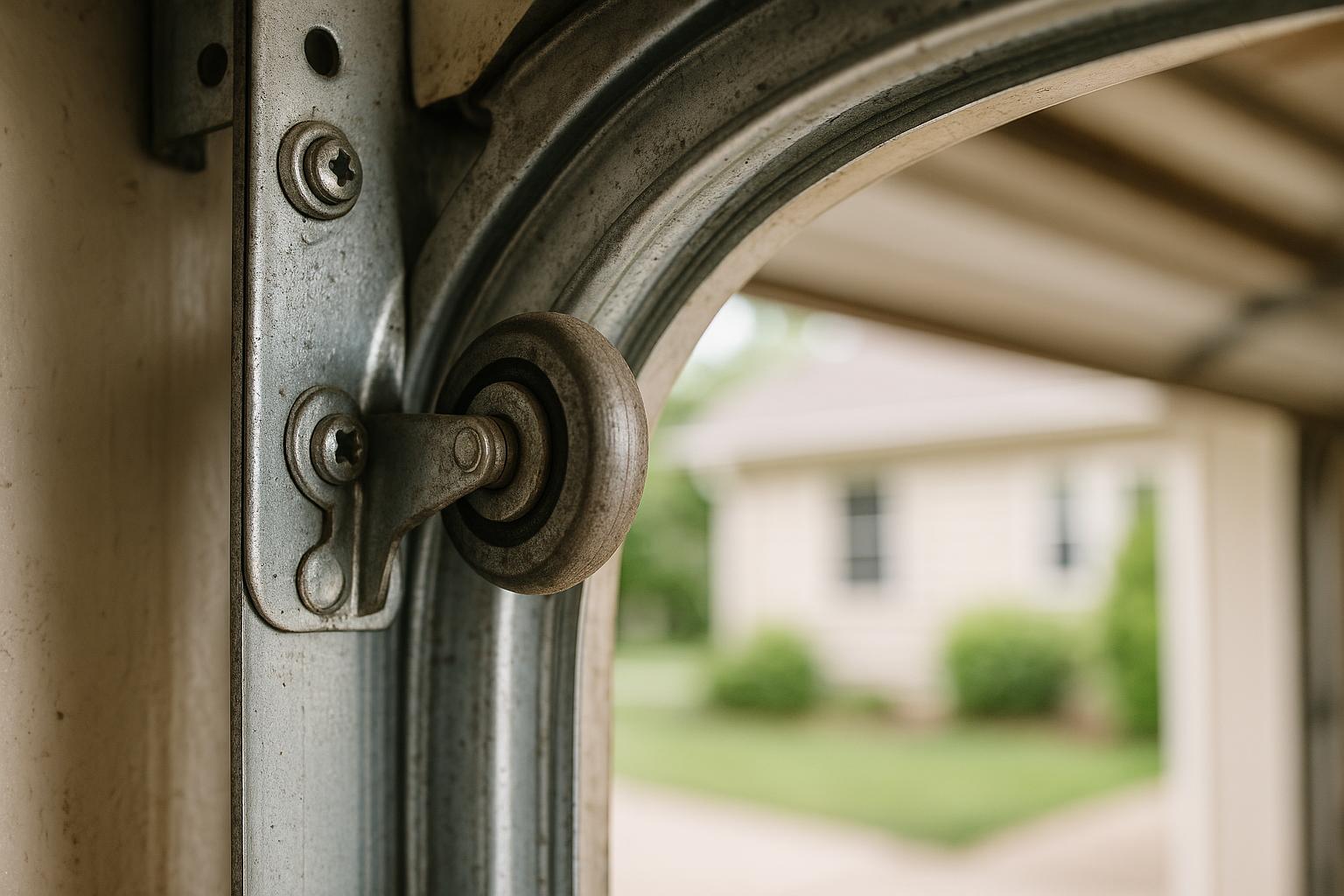
- Worn rollers: Metal rollers wear down over time and can start grinding against the track. If your rollers are original to the door and more than a few years old, this is a likely culprit.
- Misaligned tracks: If the vertical or horizontal tracks have shifted even slightly, the door can scrape against them as it moves. This creates a harsh metal-on-metal sound that's hard to ignore.
- Lack of lubrication: Dry metal components rubbing together will grind. This is one of the easiest fixes — but only if you catch it before the parts are damaged.
If you hear grinding, start by visually inspecting the rollers and tracks. Look for visible wear, debris in the tracks, or any sections where the track appears bent or out of alignment. In many cases, replacing worn steel rollers with nylon rollers can dramatically reduce noise and extend the life of your door system.
Squealing or Squeaking
A high-pitched squeal or squeak usually means metal parts are moving without enough lubrication. The most common sources include:
- Hinges: The hinges that connect your door panels pivot every time the door moves. Without lubrication, they'll squeak loudly.
- Torsion spring coils: As the spring winds and unwinds, dry coils can produce a squealing sound.
- Bearing plates and pulleys: These small but critical components need periodic lubrication to operate quietly.
A silicone-based or lithium-based garage door lubricant applied to hinges, rollers, springs, and bearing plates can often eliminate squealing immediately. Avoid using WD-40 as a long-term lubricant — it's a solvent that can actually strip away the grease your components need.
Rattling or Vibrating
If your garage door rattles or vibrates during operation, something is loose. Common causes include:
- Loose hardware: The nuts, bolts, and screws that hold your door system together can loosen over time due to the constant vibration of daily use. A simple socket wrench can tighten most of them.
- Loose chain on the opener: If you have a chain-drive garage door opener, the chain can loosen and slap against the rail, creating a rattling noise. This is especially common in older openers.
- Worn opener components: Internal gears or drive mechanisms in the opener unit itself can rattle when they start to wear out.
Rattling might seem minor, but loose hardware can lead to bigger problems. A loose hinge can cause a roller to pop out of the track, and a loose bracket can put extra stress on other components. It's worth tightening everything up at least once or twice a year.
Banging or Popping
A loud bang or pop is harder to ignore — and for good reason. These sounds often indicate a more serious issue:
- Torsion spring problems: A single loud bang, especially when you're not operating the door, often means a spring has snapped. This is a dangerous situation and should only be handled by a trained technician.
- Panel issues: If a door panel is warped, cracked, or damaged, it can pop or bang as it moves through the tracks. This is more common with older wooden doors or doors that have been impacted.
- Opener gear failure: A popping sound from the opener unit can mean the internal gears are stripped or breaking. The door may still move, but the opener is working much harder than it should.
If you hear a sudden, loud bang from your garage, check the springs first. A broken torsion spring is usually obvious — you'll see a gap in the coil above the door. Do not attempt to open or close the door manually or with the opener until the spring is replaced.
Rumbling or Low Humming
A deep rumble or hum during operation is often related to the garage door opener itself. Chain-drive openers are naturally louder than belt-drive models, but an increase in noise over time can signal wear. If the motor hums but the door doesn't move, the motor gear or capacitor may have failed.
Homeowners in Sylvania, Maumee, Perrysburg, and other communities around Toledo who are tired of a noisy opener often upgrade to a belt-drive model. These openers are significantly quieter and ideal for homes with living space above or adjacent to the garage.
When to DIY and When to Call a Professional
Some noisy garage door fixes are simple enough for a handy homeowner:
- Applying lubricant to rollers, hinges, springs, and tracks
- Tightening loose bolts and screws
- Clearing debris from the tracks
However, some repairs should always be left to a professional:
- Spring replacement: Torsion springs are under extreme tension and can cause serious injury if handled improperly.
- Track realignment: Improperly adjusted tracks can cause the door to bind, jump off the track, or fall.
- Opener repair or replacement: Electrical components and motor assemblies require proper tools and expertise.
- Cable replacement: Lift cables work in conjunction with the springs and are also under significant tension.
Don't Ignore What Your Garage Door Is Telling You
A noisy garage door is more than just an annoyance — it's a warning. Every unusual sound is a clue that something in the system is wearing out, coming loose, or about to fail. Addressing these issues early almost always costs less than waiting for a breakdown.
At Toledo Garage Door, we help homeowners and businesses across Toledo, Oregon, Holland, and the surrounding areas diagnose and fix noisy garage doors every day. Whether it's a quick lubrication and tune-up or a full roller and spring replacement, we show up on time and get it done right.
If your garage door is making sounds it shouldn't, don't wait for the problem to get worse. Give us a call and let us take a look before a small noise turns into a big repair bill.