
Your Garage Door Springs Are Under More Stress Than You Think
Your garage door is likely the largest moving part of your home, and the springs are what make it possible to open and close it with ease. Whether you use your garage door twice a day or ten times a day, those springs are under constant tension — and they have a limited lifespan.
Most standard torsion springs are rated for about 10,000 cycles, with one cycle being a single open-and-close. For the average Toledo household, that translates to roughly seven to ten years of use. But factors like extreme temperature swings, lack of maintenance, and heavy door panels can shorten that lifespan considerably.
The good news is that springs rarely fail without warning. If you know what to look for, you can catch the problem early and schedule a replacement before you're stuck with a garage door that won't budge on a freezing January morning.
7 Warning Signs Your Garage Door Springs Are Failing
1. Your Door Feels Heavier Than Usual
Try this simple test: disconnect your garage door opener by pulling the emergency release handle, then manually lift the door about halfway. A properly balanced door should stay in place on its own. If it feels extremely heavy or slams back down, your springs are losing tension and struggling to counterbalance the weight of the door.
This is one of the earliest and most reliable signs that your springs are wearing out. Don't ignore it — a door that's too heavy for its springs puts enormous strain on your opener motor, which can lead to a second expensive repair.
2. The Door Opens Unevenly or Crooked
If your garage door tilts to one side as it opens or closes, one of your extension springs may be weaker than the other. On doors with a pair of extension springs — one on each side of the horizontal tracks — uneven wear can cause the door to rise crookedly. This puts stress on the tracks, rollers, and cables, and it can cause the door to get jammed.
3. You Hear Loud Squeaking or Popping Sounds
Some noise during operation is normal, but loud squeaking, grinding, or popping sounds are a red flag. These noises often indicate that the coils of a torsion spring are rubbing against each other due to wear, or that a spring is beginning to separate. If you hear a sudden loud bang from your garage — almost like a firecracker — a spring may have already snapped.
4. Visible Gaps in the Spring Coils
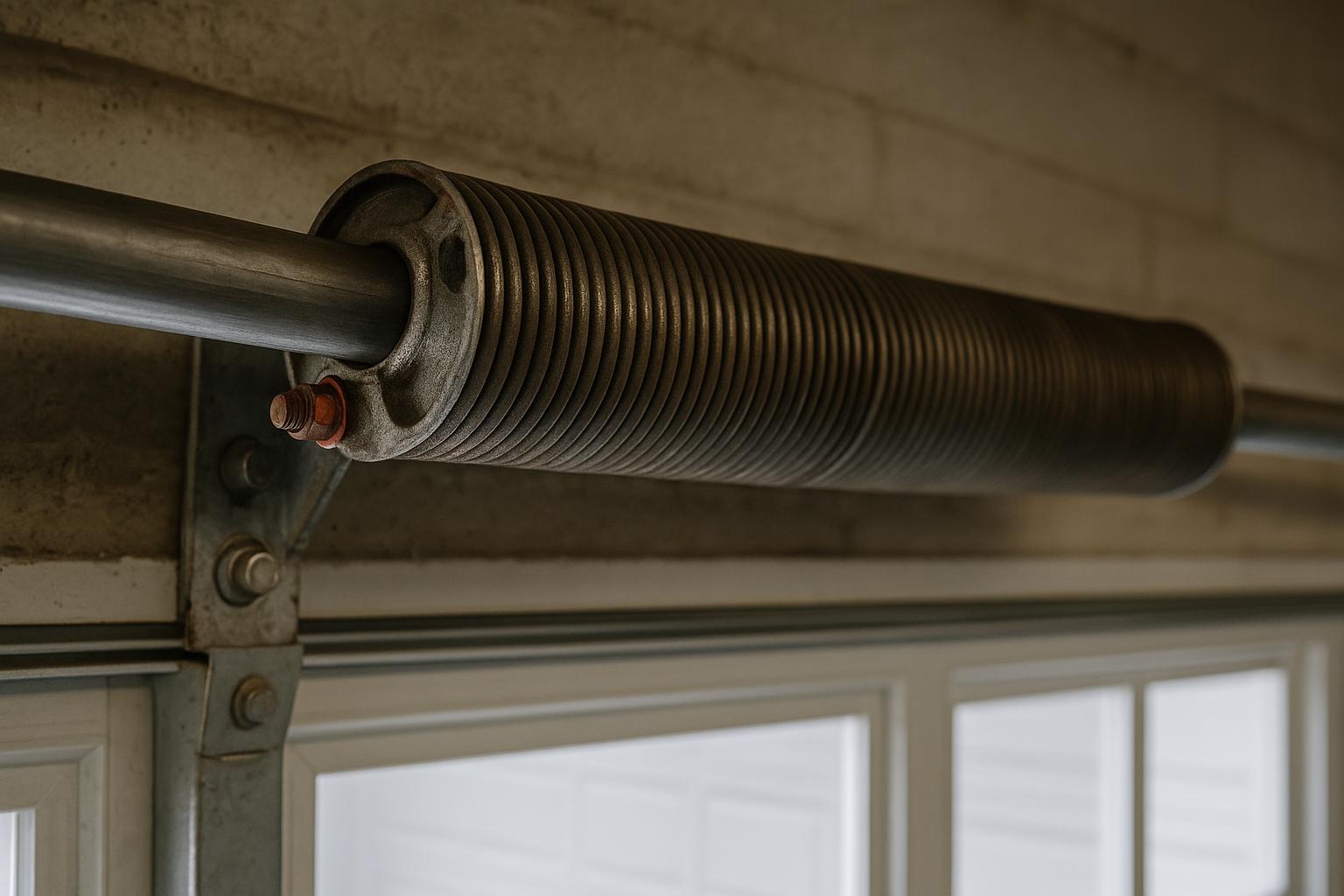
Take a look at the torsion spring mounted above your garage door. On an intact spring, the coils are tightly wound together with no visible space between them. If you can see a gap — even a small one — the spring has broken or is in the process of failing. This is a clear sign that you need professional replacement immediately.
5. Your Opener Struggles or Stops Mid-Cycle
When springs lose their ability to support the door's weight, your garage door opener has to work much harder. You might notice the motor straining, the door moving more slowly than usual, or the opener stopping partway through a cycle. Many modern openers have a safety feature that shuts them off when they detect excessive resistance, which can look like a random malfunction when the real culprit is a failing spring.
6. The Door Closes Too Fast
A garage door that slams shut instead of lowering smoothly is dangerous. This usually means the springs can no longer control the descent of the door. A standard residential garage door can weigh between 150 and 250 pounds — sometimes more for insulated or wooden doors. A door dropping at full speed is a serious safety hazard for your family, pets, and vehicles.
7. Rust or Corrosion on the Springs
Rust weakens the metal and increases friction between the coils, which accelerates wear. In a climate like Toledo's — where we deal with humidity, rain, snow, and road salt tracked into garages — corrosion is a common issue. If your springs look rusty or pitted, their remaining lifespan is likely much shorter than you'd expect.
Can You Replace Garage Door Springs Yourself?
We strongly advise against it. Garage door springs are under extreme tension, and a mishandled spring can cause serious injury or even death. Torsion springs in particular require specialized tools called winding bars and a thorough understanding of the spring system. Every year, emergency rooms across the country treat injuries from DIY spring replacement attempts.
This is a job best left to trained professionals who handle spring replacements every day and have the proper equipment to do it safely.
What to Expect During a Professional Spring Replacement
When you call a professional garage door company for spring replacement, the process is straightforward:
- Inspection: A technician will assess the condition of your springs, cables, drums, and other hardware to determine exactly what needs to be replaced.
- Spring sizing: Springs must be matched precisely to the weight and size of your door. Using the wrong spring can cause poor balance, premature failure, or damage to other components.
- Replacement: The technician will safely release the tension on the old springs, remove them, and install new ones. Most replacements take about an hour.
- Balancing and testing: After installation, the door is balanced and tested to ensure smooth, safe operation.
Many homeowners in Sylvania, Maumee, Perrysburg, and throughout the Toledo area are surprised at how affordable spring replacement is compared to the cost of repairing damage caused by a spring that was allowed to fail completely.
How to Extend the Life of Your Garage Door Springs
While springs will eventually wear out no matter what, regular maintenance can help you get the most out of them:
- Lubricate your springs two to three times a year with a silicone-based garage door lubricant. This reduces friction and helps prevent rust.
- Schedule annual maintenance with a professional who can check spring tension, inspect cables, and catch small problems before they become big ones.
- Consider high-cycle springs when it's time for replacement. These are rated for 25,000 or even 50,000 cycles and can last two to five times longer than standard springs.
- Keep your garage dry and well-ventilated to reduce moisture and slow down corrosion.
Don't Wait for a Spring to Snap
A broken garage door spring is one of the most common service calls we get at Toledo Garage Door — and in most cases, the homeowner noticed warning signs weeks or even months before the spring finally gave out. Catching the problem early means you get to schedule the repair on your terms instead of dealing with an emergency when you're trying to get to work or bring groceries inside.
If you've noticed any of the warning signs listed above, or if your garage door springs are more than seven years old, it's worth having them inspected. Our team serves homeowners across Toledo, Oregon, Holland, and the surrounding areas with fast, honest garage door service.
Give Toledo Garage Door a call today to schedule a spring inspection and keep your garage door running safely and smoothly.