
That Frustrating Moment When Your Garage Door Won't Stay Closed
You press the button on your garage door remote, watch the door glide downward, and then — just before it reaches the floor — it stops and reverses back up. You try again. Same thing. Maybe it works on the third attempt, maybe it doesn't. Either way, you're standing in your Toledo driveway wondering what's going on.
This is one of the most common garage door problems we see, especially during Ohio's temperature swings between seasons. The good news is that it's usually fixable, and understanding the cause can help you decide whether it's a quick DIY adjustment or something that needs professional attention.
How Your Garage Door Knows When to Stop
Modern garage door openers use two main safety mechanisms to decide when the door should stop or reverse:
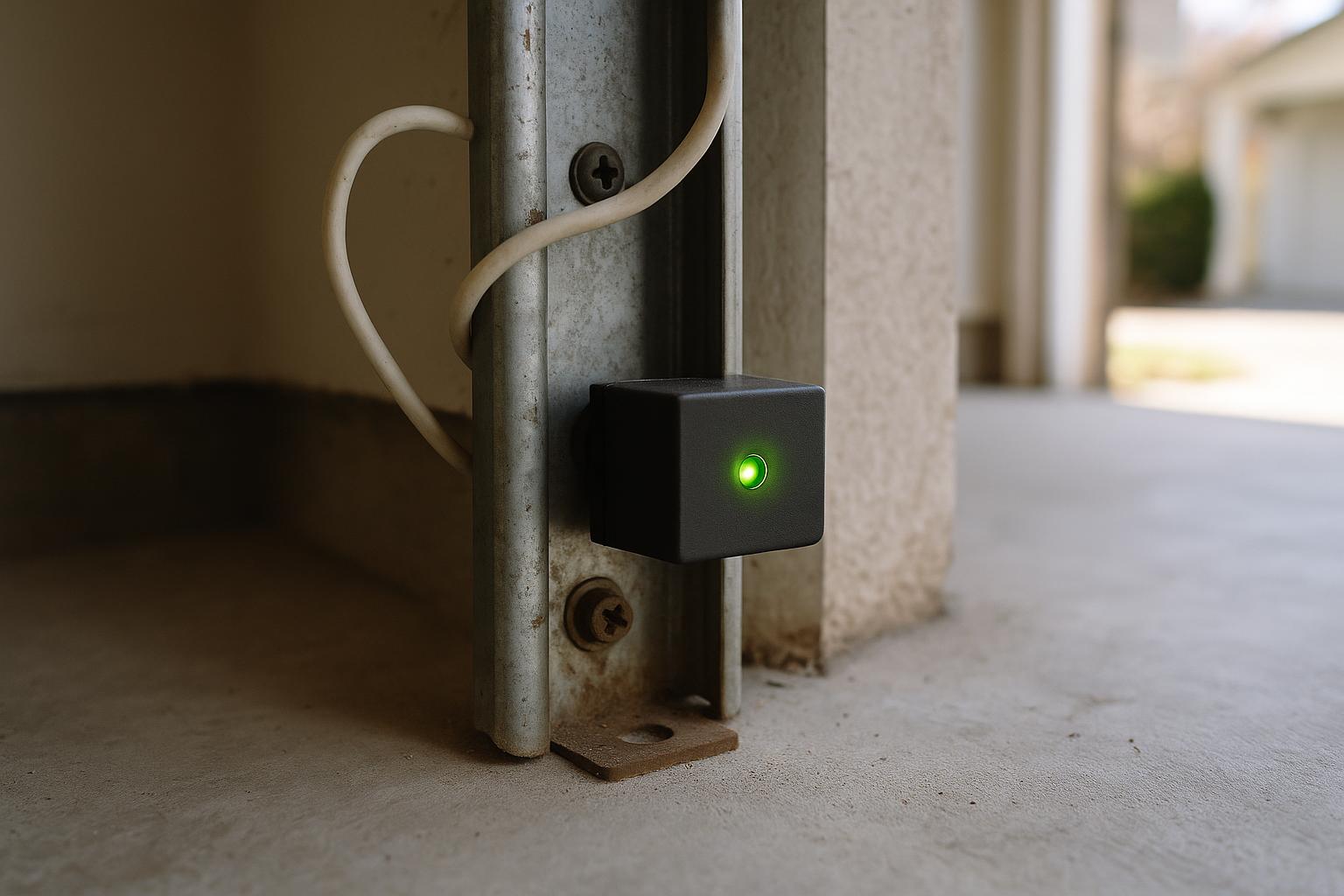
- Safety sensors (photo eyes): These are the small sensors mounted near the bottom of your garage door tracks on either side. They project an invisible beam across the opening. If anything breaks that beam while the door is closing, the opener reverses the door to prevent injury or damage.
- Force and travel limit settings: Your opener is programmed with specific limits that tell it how far the door should travel and how much resistance it should tolerate before reversing. If the door encounters unexpected resistance — or if the settings are off — it will reverse as a safety precaution.
When your door reverses before reaching the floor, one of these systems is almost always involved. Let's walk through the most common culprits.
1. Misaligned or Dirty Safety Sensors
This is the number one reason garage doors reverse prematurely, and it's often the easiest to fix. The photo-eye sensors on either side of your garage door opening need to be perfectly aligned with each other to maintain the infrared beam between them.
Over time, sensors can get bumped by bikes, lawnmowers, trash cans, or even kids playing in the garage. They can also accumulate dust, cobwebs, or moisture — all common in Toledo garages, especially during humid summers or after winter storms blow debris inside.
What to check:
- Look at the LED lights on each sensor. Most models show a steady green light when aligned and an amber or blinking light when misaligned.
- Gently wipe the sensor lenses with a soft, dry cloth.
- Make sure nothing is blocking the beam path between the two sensors — even a small leaf or cobweb can trigger a reversal.
- If a sensor has been knocked out of position, carefully adjust it until the indicator light turns steady.
2. Incorrect Close-Limit Settings
Your garage door opener has an internal setting that tells it exactly how far the door should travel when closing. If this setting is off — even slightly — the opener may think the door has hit an obstruction when it's actually just reaching the floor. In response, it reverses.
This issue often shows up after a new opener installation, a power outage that resets the unit, or gradual changes in the door's operation over time. Temperature changes in Sylvania, Perrysburg, and other areas around Toledo can cause metal tracks and components to expand and contract, subtly shifting how far the door needs to travel.
What to do:
Most openers have adjustment screws or digital controls for the close-limit setting. Your owner's manual will show you where these are and how to make small adjustments. Turn the close-limit adjustment in small increments, testing the door after each change. If you're not comfortable making this adjustment yourself, a technician can dial it in quickly.
3. Worn or Damaged Rollers and Tracks
If your garage door rollers are worn, cracked, or caked with grime, the door won't glide smoothly along the tracks. This added friction creates resistance that the opener interprets as an obstruction, triggering the auto-reverse feature.
Similarly, bent or misaligned tracks can cause the door to bind at certain points during its travel. You might notice the door hesitating, jerking, or making grinding noises before it reverses.
Signs to look for:
- Visible wear or cracks on nylon rollers
- Metal rollers that no longer spin freely
- Gaps between the rollers and the track
- Dents, bends, or rust on the tracks themselves
- Scraping or grinding sounds during operation
Track and roller issues are best handled by a professional, since improper adjustments can create bigger problems or compromise the door's safety.
4. Broken or Weakening Springs
Your garage door springs carry the vast majority of the door's weight. When a spring weakens or breaks, the opener has to work much harder to move the door. This extra strain can exceed the opener's force settings, causing it to reverse.
If your door feels noticeably heavier when you try to lift it manually, or if you heard a loud bang from the garage recently, a broken spring is likely the issue. Spring replacement is not a DIY job. These components are under extreme tension and can cause serious injury if handled improperly. This is one repair you should always leave to experienced technicians.
5. Wiring Problems
Less common but still worth mentioning: damaged or frayed wiring between the opener and the sensors can cause intermittent reversing issues. Rodents in the garage — not uncommon in older homes throughout Maumee, Holland, and Oregon — sometimes chew through sensor wires. Corroded connections can also cause signal interruptions that make the opener behave erratically.
If you've checked everything else and the problem persists, a wiring inspection is the next logical step.
When to Call a Professional
Some of these fixes — cleaning sensors, checking for obstructions — are simple enough for any homeowner. But if you've gone through the basics and your garage door is still reversing, or if the problem involves springs, tracks, or wiring, it's time to call in a professional.
Continuing to force a malfunctioning garage door to operate can cause additional damage to the opener, the door panels, or the hardware. What starts as a minor adjustment can turn into a costly repair if left unaddressed.
Keep Your Garage Door Reliable Year-Round
Regular maintenance goes a long way toward preventing reversing issues and other common garage door problems. An annual tune-up that includes lubrication, sensor alignment checks, spring inspection, and opener testing can catch small issues before they become big headaches.
At Toledo Garage Door, we help homeowners and businesses across Toledo and surrounding communities keep their garage doors operating safely and reliably. Whether you need a quick sensor adjustment or a complete spring replacement, we show up on time and get it done right.
If your garage door keeps reversing and you can't figure out why, give us a call. We'll diagnose the problem and have your door working properly again — usually in a single visit.